
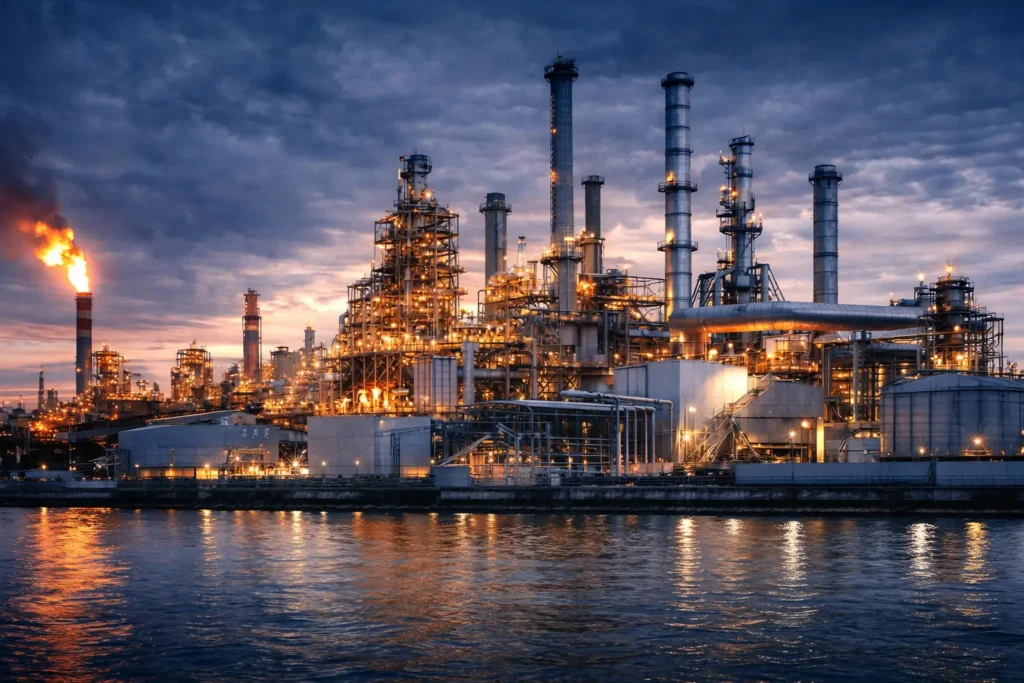
In many industrial facilities, high-temperature textiles operate quietly in the background.
They cover valves and piping systems. Protect workers from radiant heat. Shield sensitive equipment. Reduce energy loss. Support maintenance operations. Prevent heat damage. Improve safety conditions.
And when they’re properly specified, most people barely notice them.
But as industrial operations continue facing higher temperatures, stricter safety standards, and increasing pressure to improve efficiency, high-temperature textile systems are becoming more important than ever.
At Industrial Energy Products, these materials are used across a wide range of industrial applications, from removable insulation blankets and tadpole gaskets to heat shields, welding blankets, fire curtains, and custom fabricated thermal protection systems.
Industrial Heat Creates Multiple Challenges
Heat affects more than just temperature readings inside a facility.
Excessive thermal exposure can contribute to:
- Energy loss
- Equipment wear
- Worker safety risks
- Increased cooling demands
- Reduced process efficiency
- Maintenance complications
In high-temperature environments, thermal management becomes an operational issue, not simply a comfort issue.
That’s one reason industrial facilities continue investing in advanced insulation systems and high-temperature textiles designed specifically for demanding environments.
Removable Insulation Systems Continue to Grow
One of the fastest-growing applications for high-temperature textiles is removable and reusable insulation blankets.
Traditional insulation systems often need to be cut away or damaged during maintenance procedures. Removable blanket systems solve this problem by allowing technicians to quickly access equipment and reinstall insulation afterward.
These systems are commonly used on:
- Valves
- Turbines
- Flanges
- Pumps
- Heat exchangers
- Steam systems
According to industry insulation experts, removable insulation blankets help improve maintenance access while reducing energy loss and improving safety conditions around high-temperature equipment.
For facilities operating under tight maintenance schedules, accessibility matters. You need a reliable partner like Industrial Energy Products.
Textile Selection Is About More Than Temperature
One common misconception is that thermal textiles should be selected based solely on maximum temperature rating.
In reality, industrial environments place materials under multiple forms of stress simultaneously.
Engineers often need to evaluate:
- Continuous operating temperature
- Radiant heat exposure
- Abrasion resistance
- Chemical resistance
- Moisture exposure
- Flexibility
- Mechanical wear
- Maintenance handling
A fabric that survives extreme temperatures in one application may fail quickly in another if abrasion or movement are involved.
That’s why application-specific material selection matters.
Modern Facilities Are Prioritizing Worker Protection
Worker safety remains one of the biggest drivers behind thermal textile adoption.
Facilities continue looking for ways to reduce:
- Burn risks
- Heat exposure
- Fire hazards
- Equipment contact temperatures
Modern high-temperature fabrics are increasingly engineered to improve both thermal resistance and long-term durability in harsh industrial environments.
Materials like fiberglass fabrics, ceramic textiles, silica fabrics, and coated high-temperature fabrics are commonly used to create barriers between personnel and dangerous heat sources.
Downtime Is Expensive
Industrial downtime continues becoming more costly across manufacturing, processing, and power generation environments.
When thermal protection systems fail, facilities often face:
- Unexpected shutdowns
- Equipment damage
- Increased maintenance
- Production interruptions
Properly engineered high-temperature textile systems help facilities protect critical components while improving operational reliability.
Industrial Energy Products provides high-temperature textiles and custom fabrication solutions designed specifically for demanding industrial environments where standard materials would quickly fail.
Industrial Buyers Want Long-Term Solutions
Today’s industrial buyers are increasingly focused on lifecycle value instead of short-term material cost alone.
They want products that:
- Last longer
- Improve efficiency
- Simplify maintenance
- Reduce safety risks
- Perform consistently in real-world conditions
As facilities continue pushing equipment harder and operating environments become more demanding, high-temperature textile systems are no longer viewed as niche specialty products.
They’re becoming essential components of modern industrial operations.